Nobby C. Mambo
The Good Nurse: A True Story of Medicine, Madness, and MurderNobby C. Mambo is a state coroner and medical examiner whose work gives the investigation into Reverend Florian Gall’s death its decisive forensic foundation. He first judged McKinley Crews’s death natural after an autopsy and clean laboratory tests; later, by meticulously examining Gall’s exhumed remains and amending his report after toxicology results arrived, he established digoxin toxicity as the cause of death and homicide as its manner. His role is defined by that contrast: suspicion could direct an investigation, but only evidence could make the conclusion.
Medical Examiner and Early Assessment
Mambo performed the autopsy of McKinley Crews, an older man whose death had drawn pressure from the prosecutor. Mambo agreed with Danny Baldwin’s view that the examination had been largely unproductive: Crews had died of natural causes, and the laboratory tests came back clean. The result did not support a homicide theory, even though officials had urged closer scrutiny of the case.
That early conclusion matters alongside Mambo’s later work on Gall. The book presents him not as someone who turns every uncertain death into a crime, but as an examiner whose findings change when the evidence changes. In Crews’s case, the available tests supported a natural death; in Gall’s, toxicology would supply what the initial examination could not.
Gall’s Exhumation and Examination
After Gall’s body was exhumed, the casket was taken to Mambo’s office. Danny Baldwin met it there, and a detective sergeant who had been Gall’s pastor was present to identify him. Mambo then documented the remains with the precision of a formal examination: Gall was a 68-year-old white man, 69 inches tall and 155 pounds, with an appearance consistent with his stated age. The body had been embalmed, and mold covered parts of the face, chest, fingers, legs, and feet. A toe tag identified the hospital as Somerville Medical Center.
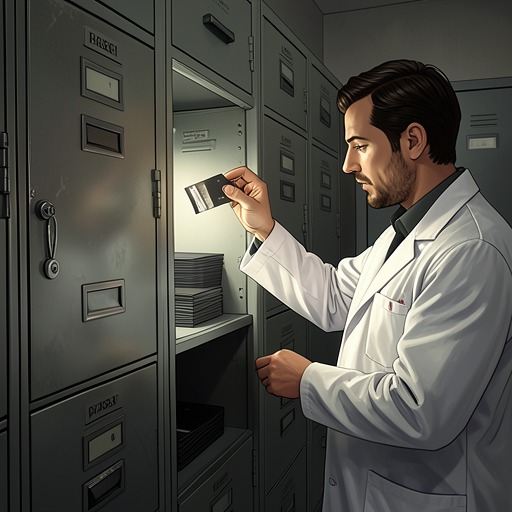
The autopsy followed the evidence through the body rather than relying on appearance alone. Mambo examined Gall’s lungs and heart; the heart weighed 660 grams and showed signs of wear and repair. He collected samples from the neck, a bedsore, the mold, fingernails, and a toenail, as well as fluid from the abdomen and spleen. He also took hair and tissue from organs including the lungs, kidneys, liver, small bowel, brain, and heart; collected the stomach contents and fluid from the eye; and sampled soil from the grave. Each item was placed in a labeled tube or bag for toxicological analysis.
Toxicology and the Homicide Finding
On November 29, 2003, Gall’s toxicology report arrived. It documented the absence of some 96 drugs, but detected substantial amounts of digoxin: 23.4 micrograms per liter in the vitreous fluid, 32.0 micrograms per kilogram in the spleen, 40.8 micrograms per kilogram in the heart, and 104 micrograms per kilogram in the kidney. The distribution and measured concentrations gave Mambo grounds to amend his report. He listed the cause of death as digoxin toxicity and the manner as homicide.
The finding established both a victim and a murder weapon, but it did not identify the person responsible or provide a sure means of conviction. The distinction is central to Mambo’s contribution: forensic evidence could establish how Gall died, while the investigators still had to prove who had administered the drug. His report transformed the case from suspicion into a confirmed homicide without pretending that it answered every question.
Narrative Significance
Mambo’s two appearances mark different limits of forensic knowledge. The clean tests in Crews’s case closed off a suspected avenue; the carefully preserved samples from Gall’s exhumation, followed by measured digoxin results, opened another. His meticulous collection of tissue, fluid, and even grave soil shows how the investigation depended on material evidence gathered long after burial, while his amended report gives that evidence a clear medical and legal meaning.
Yet the report is a threshold, not a resolution. Gall’s death could now be classified as homicide, but the drug findings and the Pyxis records still did not amount to proof against Charles Cullen. Mambo’s work therefore supplies the investigation’s firmest answer about the death while leaving the question of the killer to the investigators.